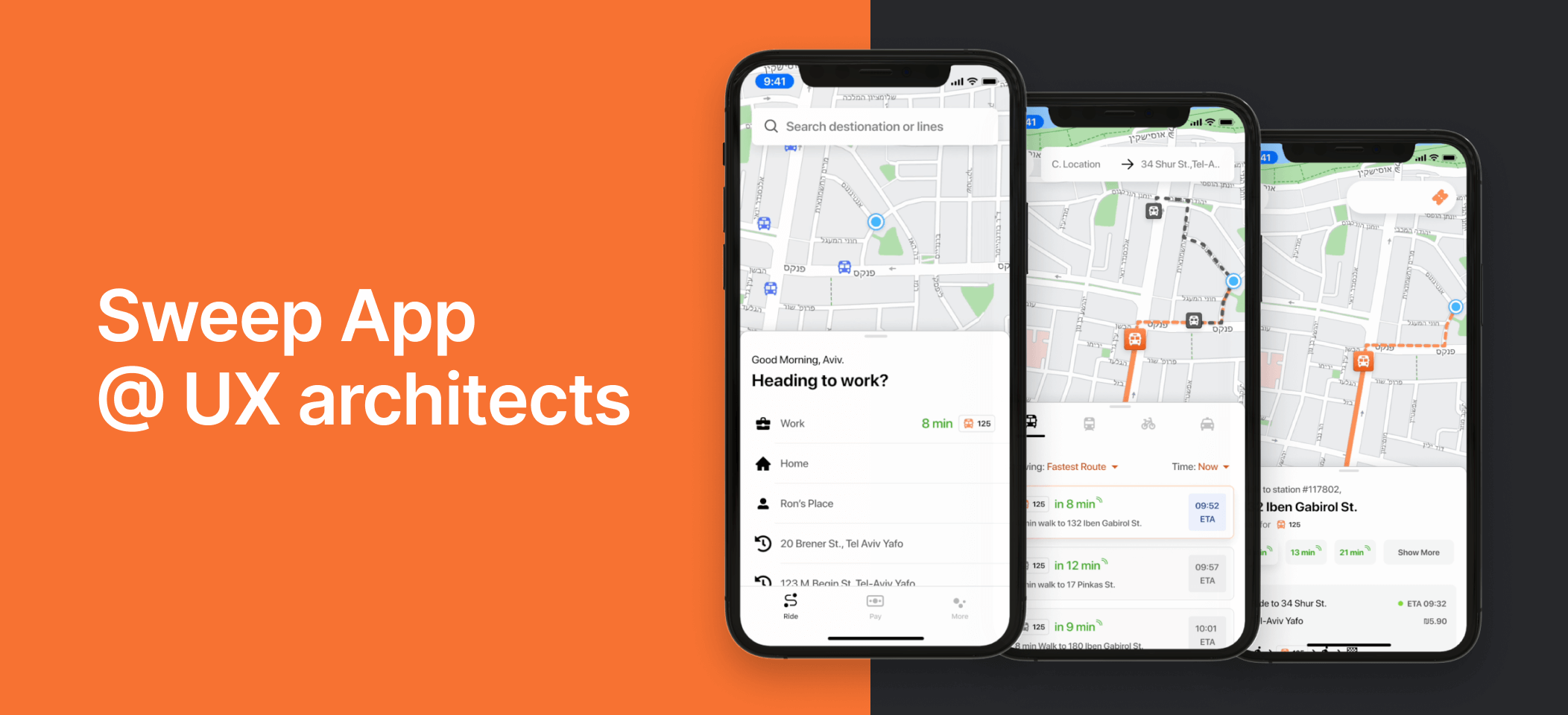
For a 2021 UX course with Dr. Ofer Monar, I designed a multimodal transit app covering buses, trains, and taxis, with guidance throughout the journey. The brief was broad, so the real work was narrowing it down.
Goals
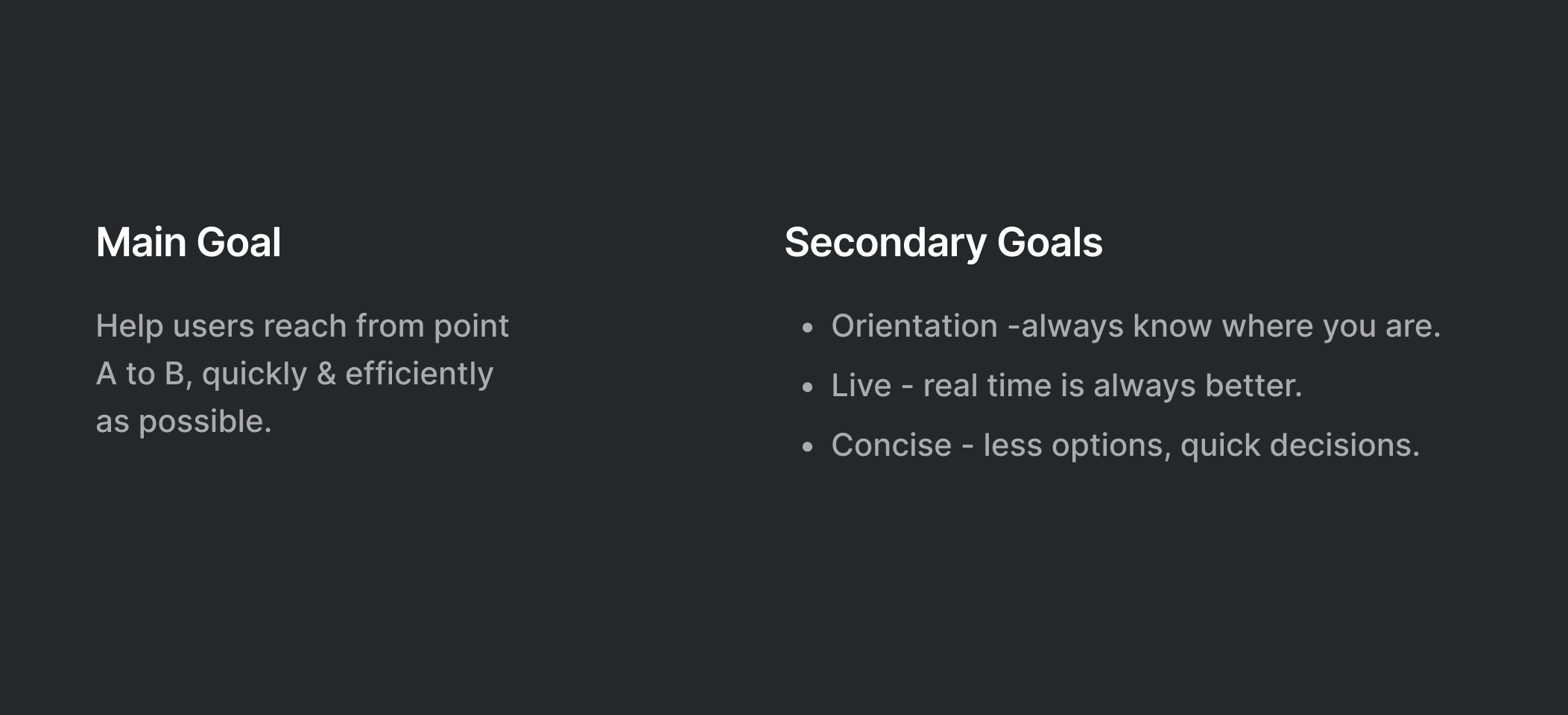
The primary goal came from the brief. I added secondary goals, then used research to challenge and refine them, because “design a transit app” is not a strategy.
Preliminary research
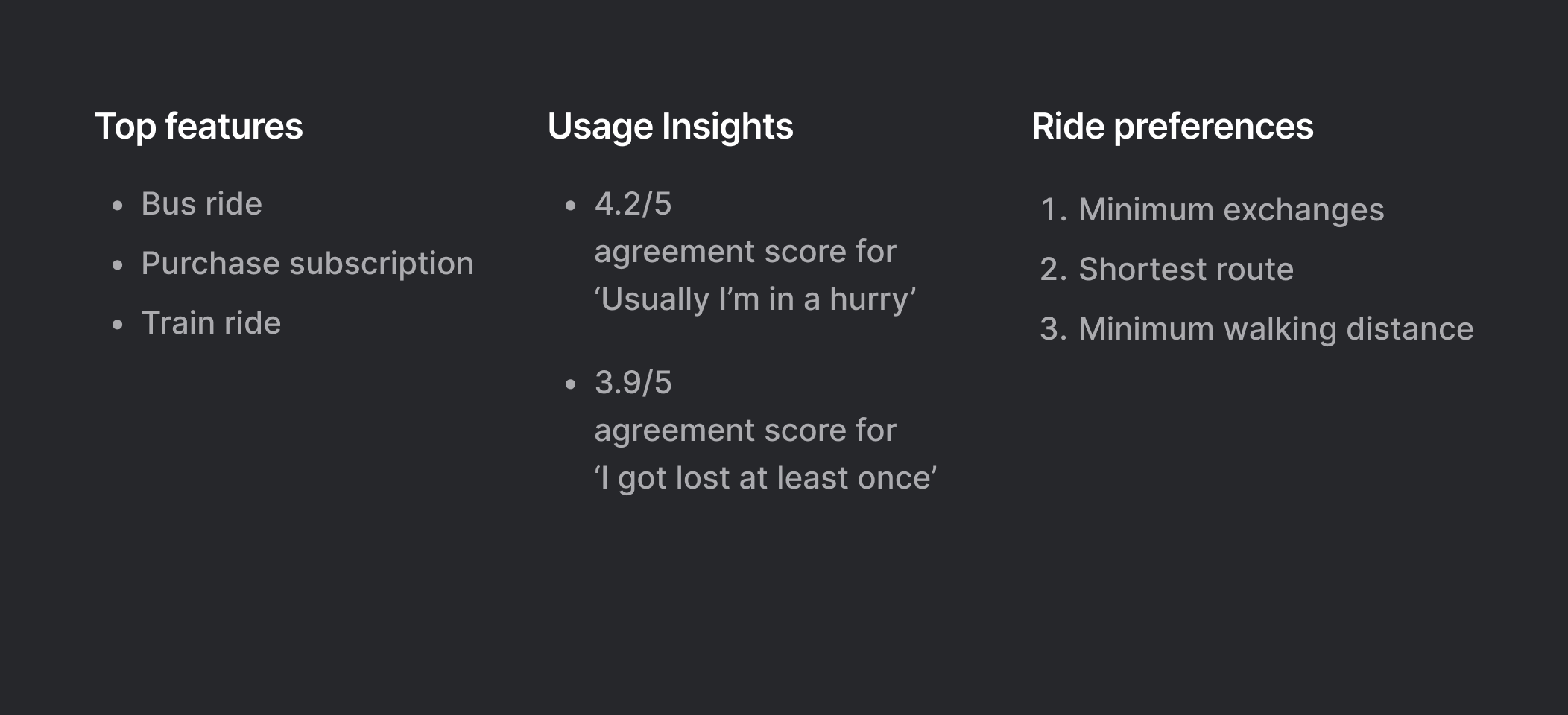
I surveyed riders to identify common behaviors and opportunities for improvement. Participants rated how frequently they used key features, responded to statements about their travel habits, and prioritized what mattered during a journey.
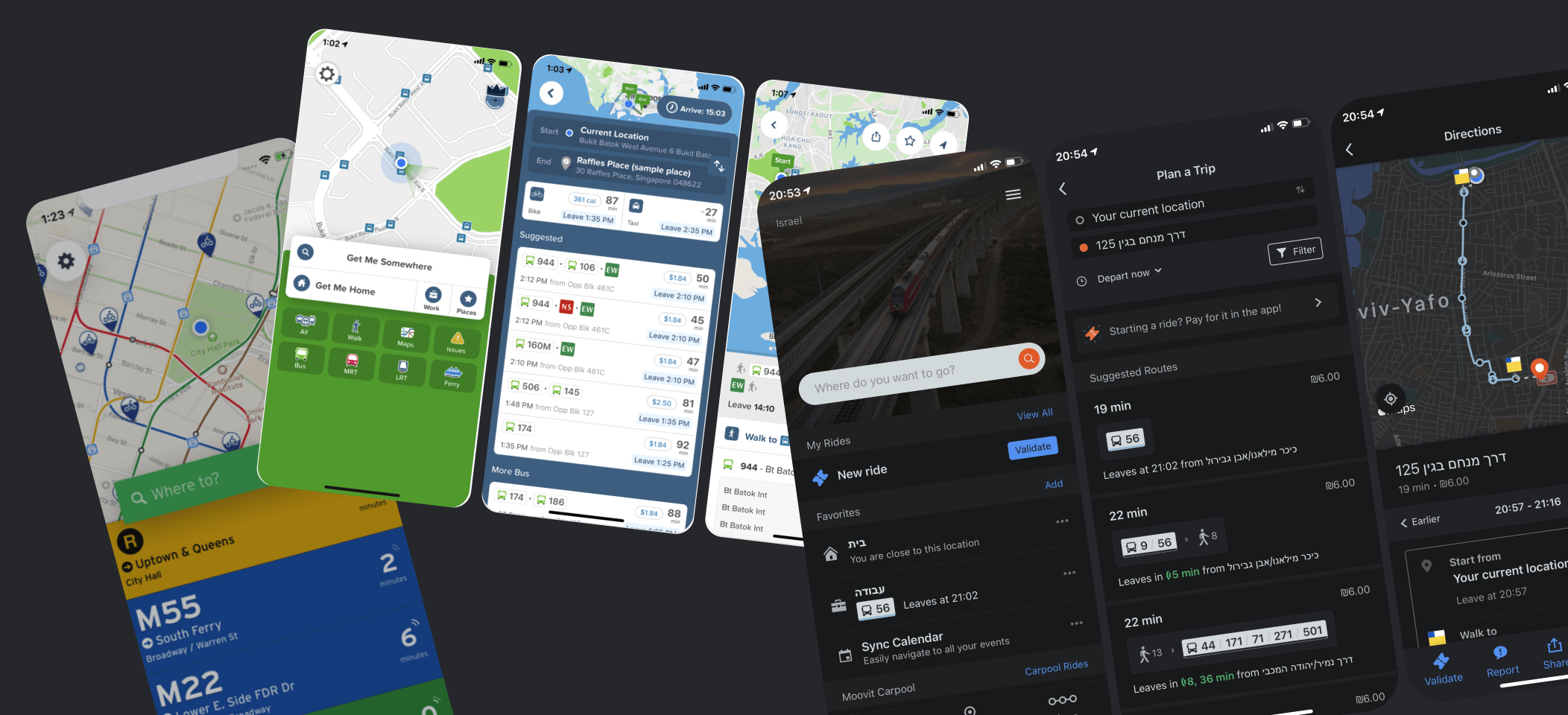
I also benchmarked products including Moovit, Transit, and Citymapper to understand familiar patterns and identify opportunities beyond them.
Putting it all together
I turned the research into a persona, prioritized the feature set, mapped the tasks required for a successful journey, and assembled the information architecture and user flows.
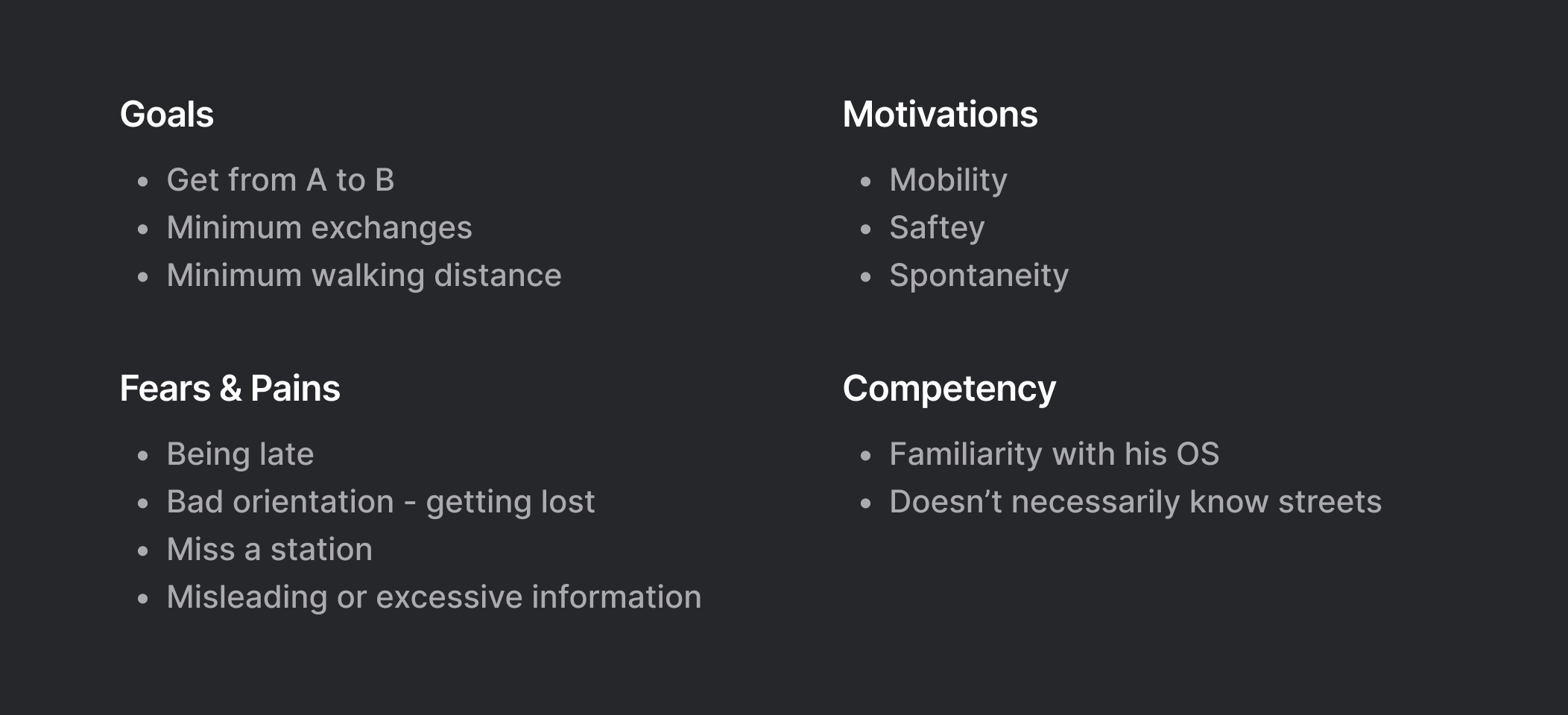
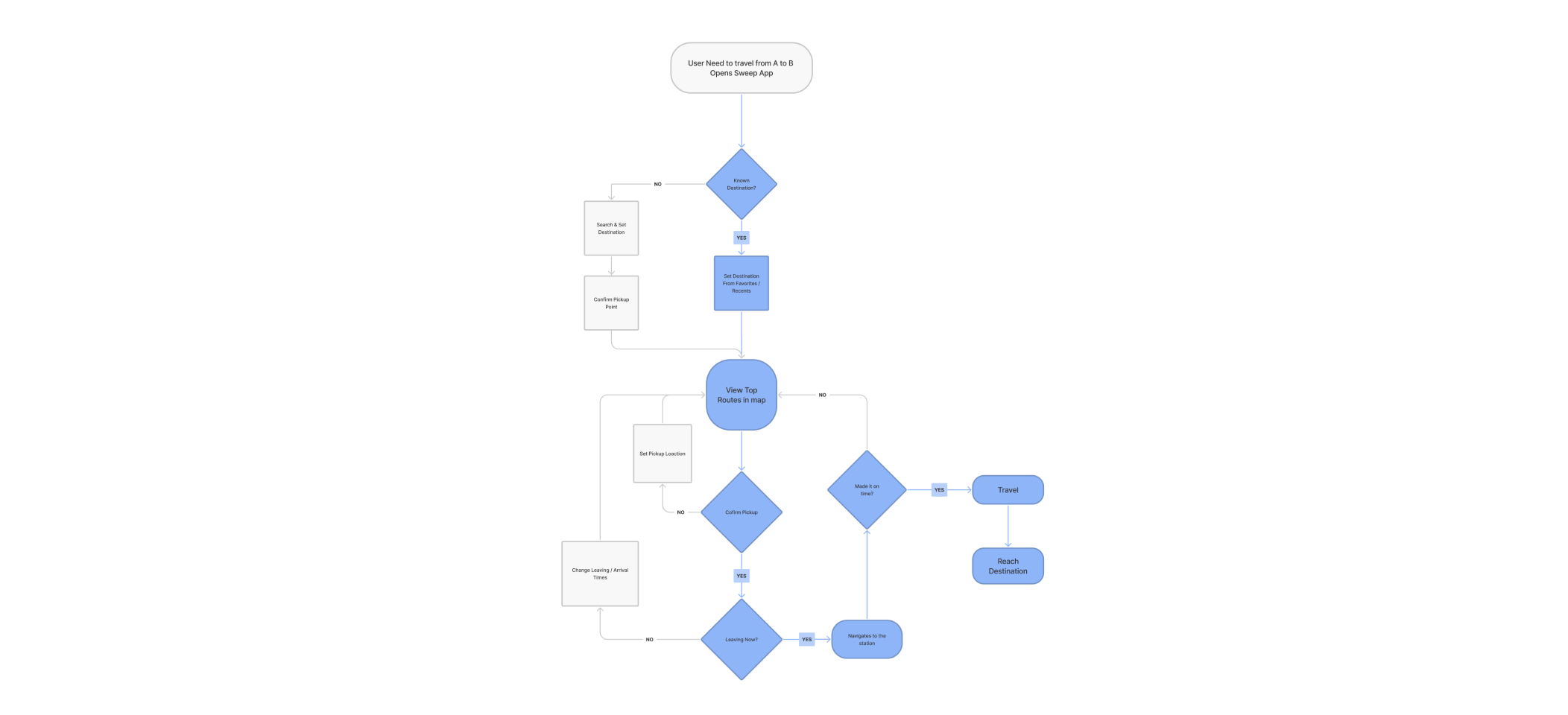
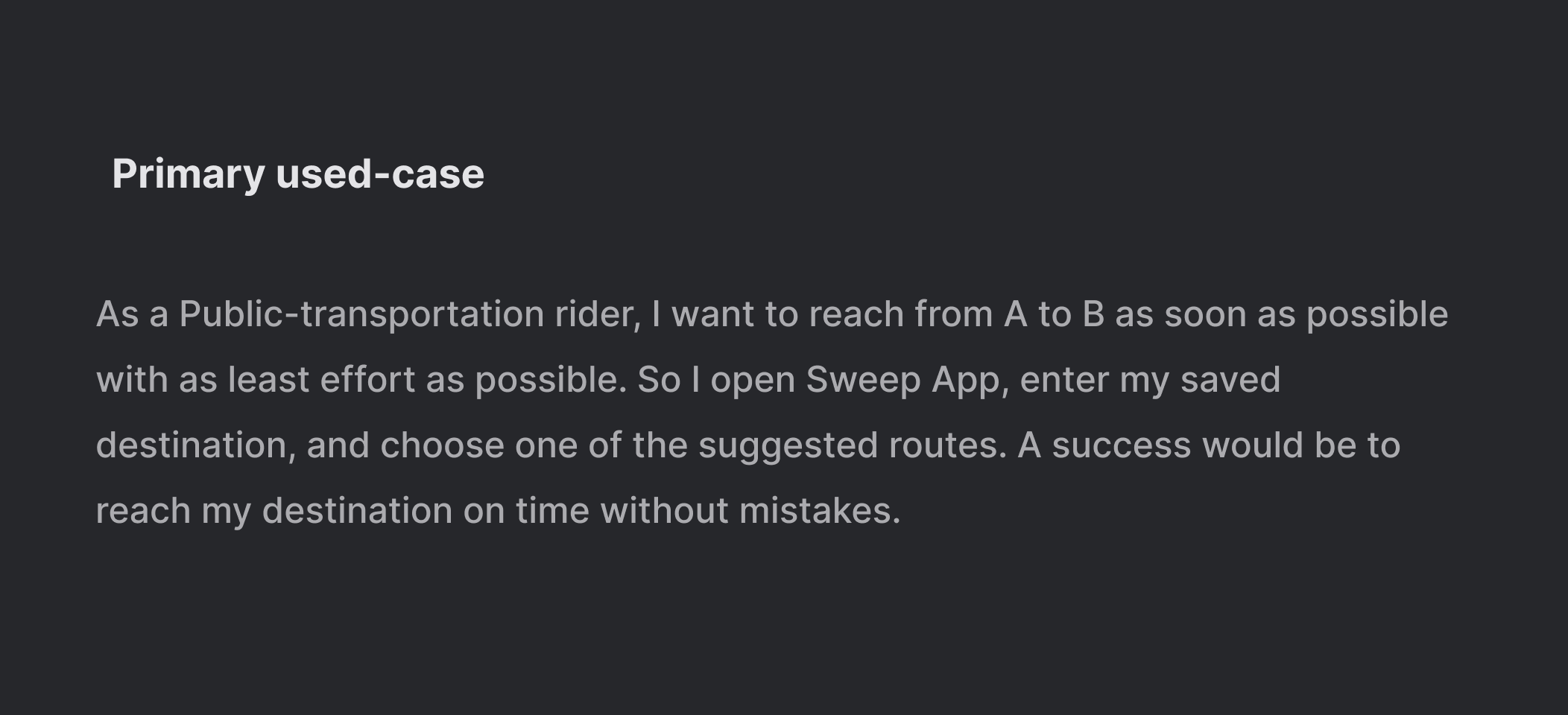
The analysis produced three main use cases. I chose one as the primary focus for the design.
Wireframes and prototype
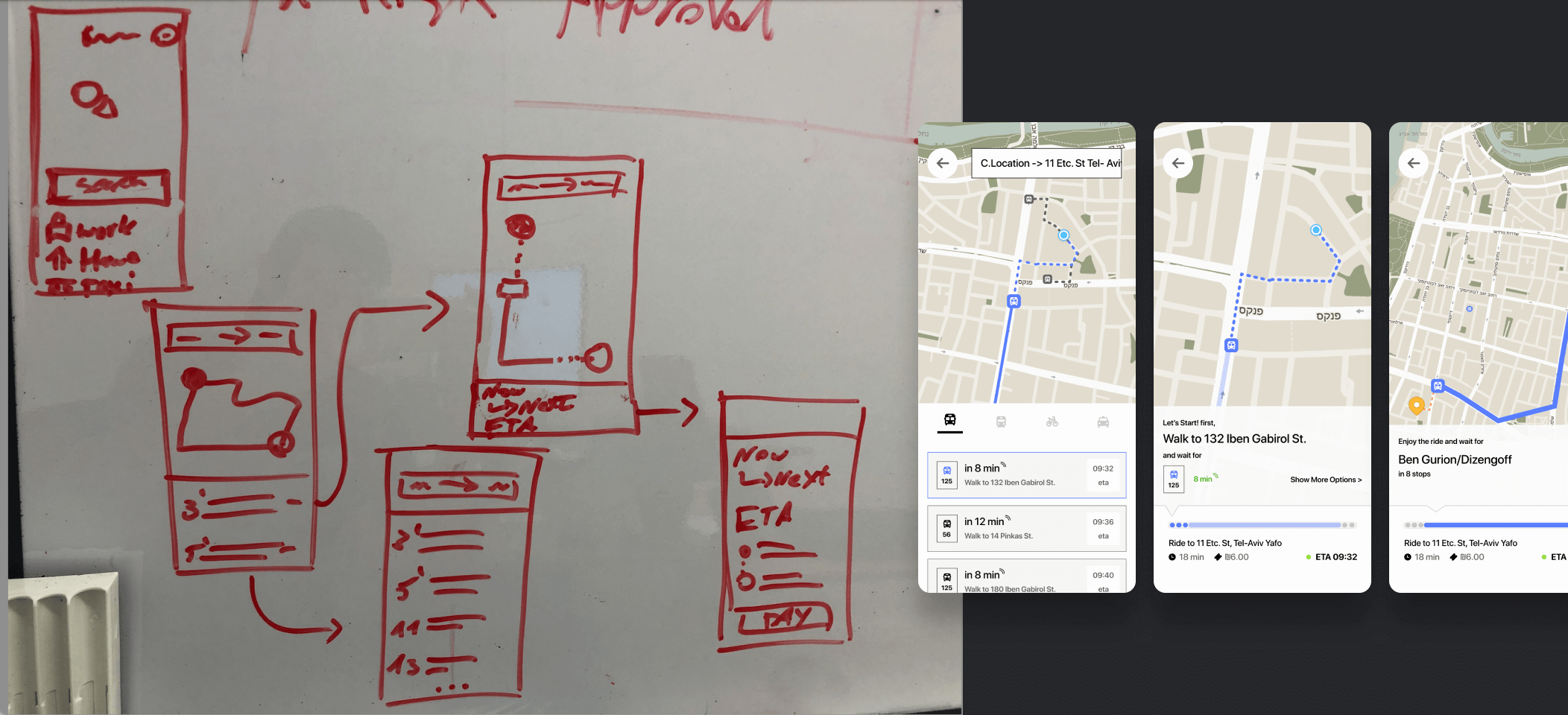
As usual - starting from whiteboard sketches through iterative wireframes and into a fully functional prototype.
Outcome and reflection
The result was a focused interactive prototype and, more importantly, a stronger research process. I’m still proud of it, with the usual student-project disclaimer: the timeframe was short and the solution needed more iteration.
If I did it again, I’d spend less time polishing the chosen direction and more time exploring alternatives at the wireframe stage. The project did what school projects should do: exposed gaps in my thinking before a real product had to pay for them.